As computers and/or laptops open spaces and create demand for new communication technology and technology changes, the mass medium categories were required to become more flexible in accepting the widely consumed Web format as the newest addition to and influence on mass medium. The traditional formats of mass medium include newspapers, radio, books, recordings, television and movies; but, the Web is the newest, most modern format of mass medium. It’s influence can be seen as changes in appearance, content and marketing of these traditional mass medium formats. As of today, the Web has achieved a critical mass of the population who has adopted this media format and preference.
Wednesday, February 29, 2012
Rethinking Mass Medium’s Definition: A Deeper Look into the Web as a New Addition to Mass Medium
There is no doubt that the Web, which is the newest and most current format of mass media, is driven by consumption. The number of Web users and consumption is ever-increasing each year, not only in the U.S., but in every country all over the world. According to the Internet World Stats, 239,893,600 people in the United States used the Web in 2010; while, the number of Web users dramatically increased in 2011 as ExploreDIA reported that 1,966,514,816 people all around the world now used the Web.
As computers and/or laptops open spaces and create demand for new communication technology and technology changes, the mass medium categories were required to become more flexible in accepting the widely consumed Web format as the newest addition to and influence on mass medium. The traditional formats of mass medium include newspapers, radio, books, recordings, television and movies; but, the Web is the newest, most modern format of mass medium. It’s influence can be seen as changes in appearance, content and marketing of these traditional mass medium formats. As of today, the Web has achieved a critical mass of the population who has adopted this media format and preference.
As computers and/or laptops open spaces and create demand for new communication technology and technology changes, the mass medium categories were required to become more flexible in accepting the widely consumed Web format as the newest addition to and influence on mass medium. The traditional formats of mass medium include newspapers, radio, books, recordings, television and movies; but, the Web is the newest, most modern format of mass medium. It’s influence can be seen as changes in appearance, content and marketing of these traditional mass medium formats. As of today, the Web has achieved a critical mass of the population who has adopted this media format and preference.

Tuesday, February 7, 2012
NO. 2 Mis(s)representation: Women in Print Media
In the middle of the night, a husband sneaks downstairs while his wife is sleeping. The husband then pulls out a 28-gauge shotgun from where they keep it stored..
Shortly thereafter, the women wakes up only to find her husband in the bathroom of their farmhouse in Marshall, Va.
Her husband had committed suicide.
 |
| (Source) |
A month after her husband died, she assumed the presidency of The Post Co. This woman was Katherine Graham, the wife of Philip Graham, who was well-known and respected President and Chief Executive Officer of The Washington Post.
Thursday, February 2, 2012
NO. 1 Informational Overload VS Filter Faliure
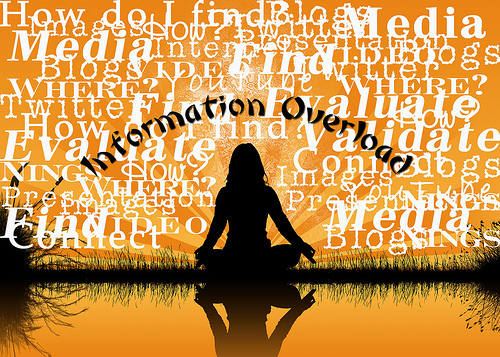
As information overload becomes more of an issue with the popularity and use of today's everyday electronics, people are beginning to question whether or not humans are evolving at the same pace as technology. Nevertheless, is the problem of information overload solely a factor constructed by today’s evolving technology? Clay Shirky, an internet technologies consultant, would beg to differ. Shirky argues that the idea of informational overload is nothing new to society, but rather is something that occurs with each new development in the providing of information to society as a whole. That is, for example, books were once considered a source of informational overload as we have had more books than any human being could possibly read for years. While it is not a new concept, informational overload is clearly a developing and worsening problem for many in today’s society.
Subscribe to:
Posts (Atom)